
Table of Contents
What happens when Islamic mysticism meets West African tradition? This is the story of Sufism in West Africa…
In this article, we’ll explore Sufism in West Africa, where its practices form a powerful part of everyday life in many Muslim communities.
Understanding Sufism
At its core, Sufism is Islam’s mystical dimension – a quest for direct and intimate experience with God through deeply embedding Islamic practices within followers’ lifestyles. It’s guided by mystical leaders called shaykhs (or walis), who lead a Sufi pathway (also known as a tariqa).
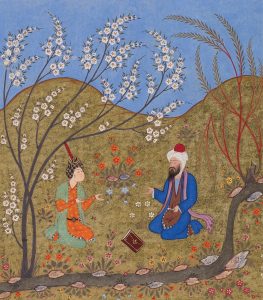
Image of Sufi Masters
The Arrival of Sufism in West Africa
At its core, Sufism is Islam’s mystical dimension – a quest for direct and intimate experience with God through deeply embedding Islamic practices within followers’ lifestyles. It’s guided by mystical leaders called shaykhs (or walis), who lead a Sufi pathway (also known as a tariqa).
Sufism first arrived in West Africa during the 12th and 13th centuries, when trade routes across the Sahara were flourishing, connecting North and West Africa. Along these routes, traders weren’t just exchanging goods – they were sharing knowledge too. Since then, Islamic sciences and Sufism played a significant role in spreading Islam throughout the region.

1889 map of trans-Saharan trading routes by French explorer Édouard Blanc
The impact is evident in statistics today, where Islam remains deeply rooted in the region. Recent data from 2020-2024 shows large Muslim populations throughout West Africa, with Mauritania, Senegal, Niger, and Mali having over 90% of their population identifying as Muslim. Within these communities, a substantial portion belongs to some form of Sufi tariqa.
Major Sufi Orders in West Africa
The Qadiriyya Tariqa
One of the oldest and largest Sufi orders in the world is the Qadiriyya Tariqa. This path was founded in Baghdad, Iraq, during the early 12th century (1134) by Shaykh Abdul Qadir Gilani.
Qadiriyya can be found worldwide in places like Indonesia, Pakistan, and Sudan, it mainly began to spread within West Africa during the early 19th century.
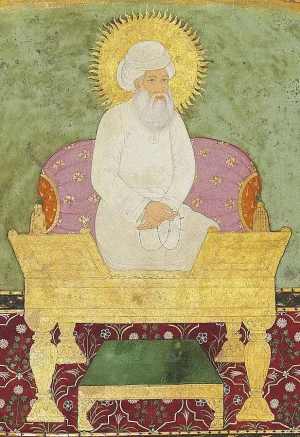
Painting of Abdul Qadir Gilani
While branches of This expansion was largely due to Usman dan Fodio – an influential Fulani scholar who founded the Sokoto Caliphate, one of the largest empires in African history. His impact on both Islam and politics in the region has been both significant and long-lasting.
Dan Fodio grew up during a time of widespread social inequality in the Hausa Kingdoms, in an era where a mix of Islamic and pre-Islamic practices prevailed. After receiving a strong Islamic education both from his father and through established shaykhs of the time, he joined the Qadiriyya tariqa and began preaching its Islamic teachings around the 1770s.
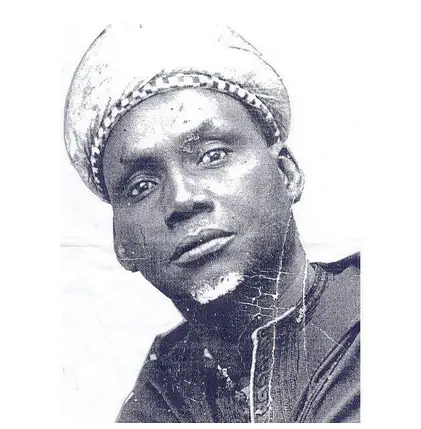
Image of Usman Dan Fodio
By 1804, he led his own branch of the Qadiriyya and soon after initiated a jihad (military conquest), calling for reform and purification of Islamic practices and governance among the Hausa states.
By the mid-19th century (around 1842-1859), the Sokoto Caliphate had become a vast center of Islamic learning, with the Qadiriyya order at its heart, shaping its religious, educational, and political life. Even today, the Sultan of Sokoto, a descendant of dan Fodio, is considered the spiritual leader for Qadiriyya Muslims, especially in Nigeria.
The Tijaniyya Tariqa
Another key Sufi tariqa is the Tijaniyya, arguably the most influential tariqa in West Africa, though it was founded in Morocco by Shaykh Ahmed Al-Tijani in the 18th century. Born in Algeria, Al-Tijani began exploring Sufism at age 21 and traveled throughout the Muslim world, learning from various established shaykhs. He returned to Fes, Morocco in 1789, where he established and began teaching his Tijaniyya order.
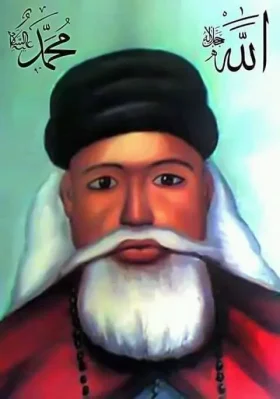
Painting of Ahmed Al-Tijani
The Tijaniyya order is now the most common across the region, with significant percentages of Muslims identifying with this brotherhood in various countries:
- Senegal (51%)
- Chad (35%)
- Niger (34%)
- Cameroon (31%)
- Ghana (27%)
- Guinea Bissau (20%)
- Nigeria (19%)
As per pewresearch.org
The Tijaniyya arrived in West Africa through established trade links. By the mid-19th century, a well-known leader named Al-Hajj Umar Tall became pivotal in spreading this tariqa throughout the region through teaching and writing extensive books on Islamic practices.
Tall’s influence was legitimized during his hajj to Mecca in 1828.
There he was appointed as the Tijaniyya representative (known as khalifa) for all lands south of the Sahara (then known as Sudan) by Muhammad Al Ghali, Ahmad Al Tijani’s first successor. This was an enormous stamp of approval for Tall.
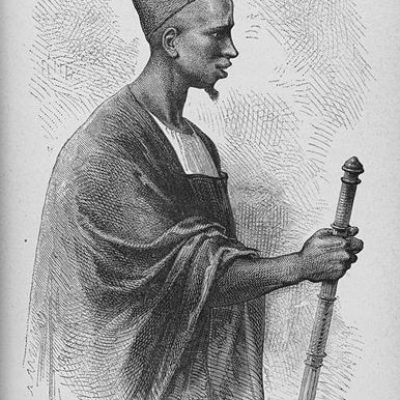
Drawing of Al-Hajj Umar Tall
Soon after, Tall created his Toucouleur Empire, which stretched across modern-day Guinea, Senegal, and Mali. There he established Islamic laws and promoted Tijaniyya belief systems, leading communities to either convert voluntarily or have faith imposed. His legacy continues to influence the region to this day.
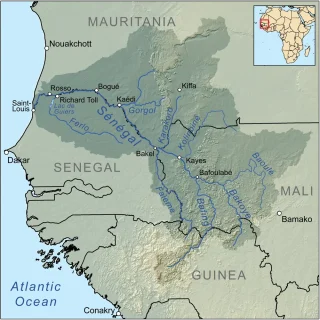
Toucouleur Empire on a map
It was in the 20th century (1900-1975) that the Tijaniyya truly grew in global popularity.
Shaykh Ibrahim Niasse, a Senegalese spiritual leader, proclaimed the concept of ‘Faydah’ or flood of spiritual blessing, which he believed was a special gift to Tijani followers. Niasse’s charisma and teachings attracted millions of followers across West Africa.
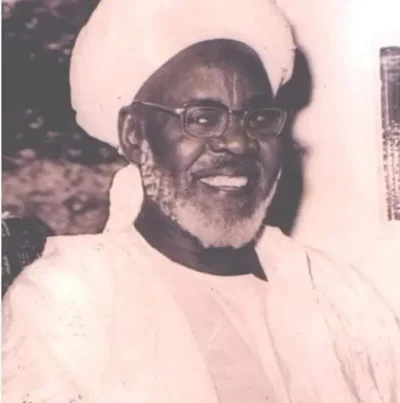
Image of Ibrahim Niasse
Today, Niasse’s branch of the Tijaniyya is global. You can find his followers not just in West Africa but in communities in the United States and Europe, particularly among African American communities.
Niasse’s impact went beyond just numbers. He revolutionized Tijani practice during his time by declaring that direct spiritual experience was available to all sincere seekers – not just the educated elite. This democratization of spiritual knowledge attracted followers from all social classes.
The Mouridiyya Tariqa
Perhaps the most unique story of Sufism in West Africa is found within Senegal, specifically in Touba, the spiritual capital of the Mouride Tariqa.
The Mouride pathway was founded in the late 19th century by Shaykh Amadou Bamba. He emphasized the spiritual value of non-violent resistance, hard work, and education. His peaceful resistance to French colonial rule made him a national hero in Senegal and beyond.
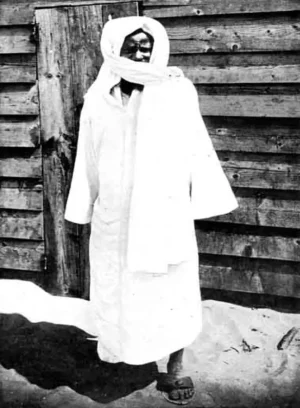
Image of Amadou Bamba
During his time, the French colonial administration was wary of indigenous leaders with significant influence, such as Bamba. Seeing him as a threat to their rule, in 1895, Bamba was exiled to Gabon for 7 years and then to Mauritania for another 5 years.
Even in isolation and harsh conditions, Bamba demonstrated sincere patience and continued his spiritual practices with unwavering devotion. He spent his days in prayer, meditation, and producing many famous spiritual poems called qasidas, which highlight his love for Islam and the values of being a pious, hardworking Muslim.

Bamba developed a unique concept called ‘Khidmah,’ which combined spiritual training with practical skills. This concept was taught in several of his schools where both religious and trade subjects were taught as acts of worship.
The act of Khidmah is perhaps most noticeable within the Baye Fall, a sub-branch of the Mouride brotherhood named after Bamba’s devoted disciple Ibrahima Fall. They’re known for their distinctive colorful clothes and their absolute dedication to hard work and worship.
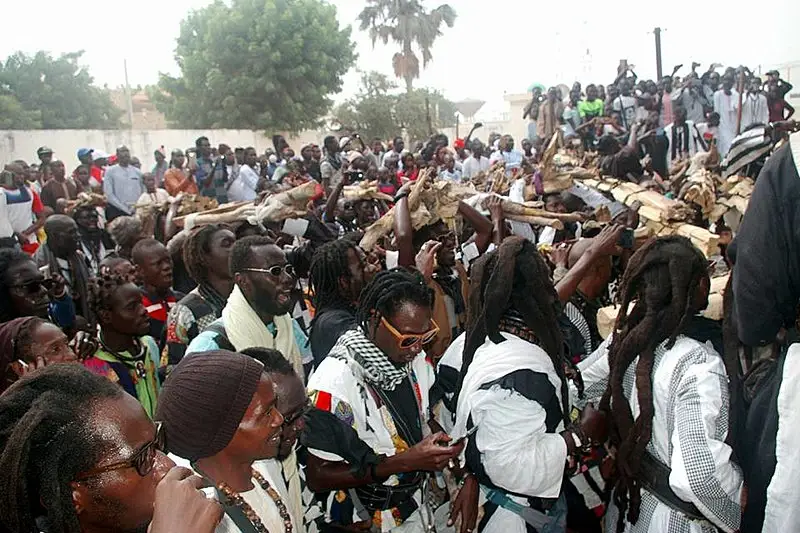
Baye Fall community
Today, studies suggest the Mouride are dominant communities in groundnut and retail economies, which account for an estimated 40% of Senegal’s GDP.
Common Sufi Practices in West Africa
Zawiyas
Many Sufi orders are organized through a network of zawiyas – buildings or community hubs that serve as meeting places for spiritual practices.
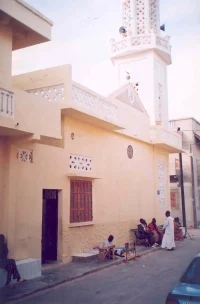
Zawiya Tidiane, based in St Louis, Senegal
Dhikr
At the heart of all Sufi practices is dhikr – the rhythmic repetition of God’s names and short prayers. Often performed in groups and with prayer beads, this form of spiritual meditation is believed to purify the heart and bring the seeker closer to the divine.
Khassidas
Another key practice is the recitation of qasidas – mystical poems that express love for God. These aren’t just religious texts; they’re works of art that have influenced West African literature and music.
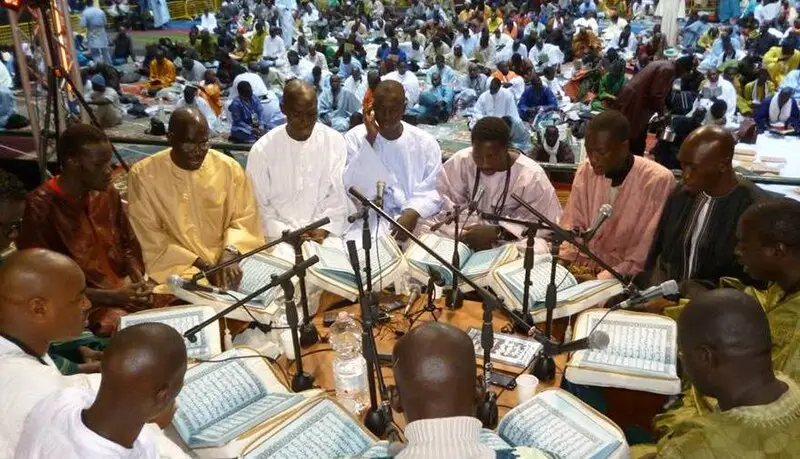
Members of the Mouride community reciting Khassidas
Events
Most Sufi communities also hold large events. Mawlid celebrations, for instance, mark the birthday of Prophet Muhammad and other major sheikhs across the region. These often involve all-night sessions of dhikr, prayer, parades, and other community activities.
Similarly, events are held within each Sufi order. For example, The Grand Magal of Touba is a massive annual pilgrimage that attracts millions of Mourides to Touba. In 2023, this event attracted over 5 million followers from over 40 different countries (Reuters, 2023). It’s a spectacular blend of spiritual devotion and cultural celebration characterized by constant prayers, recitations of Bamba’s teachings, and community activities. In Kano, Nigeria, their Mawlid celebrations often bring over half a million people.
Other Practices
Another common feature in Sufi communities are pictures of leading shaykhs that are often displayed on street walls, in homes, and throughout community spaces. These images serve as more than just decorations—they symbolize the deep spiritual connection between the shaykhs and their followers, acting as daily reminders of their guidance and ongoing presence in the lives of the community.
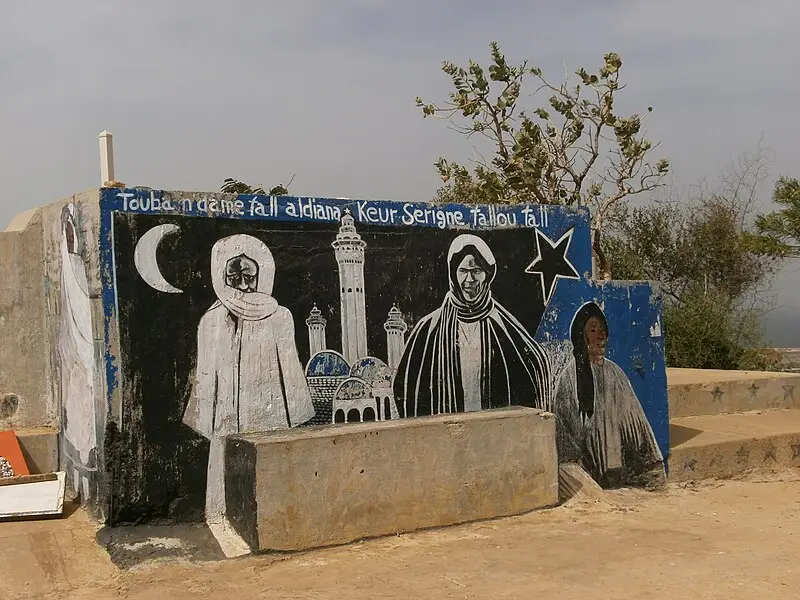
Sufi Influence Beyond Spirituality
Sufism's Political Influence
Sufi influence in the region extends far beyond the spiritual realm. Across West Africa, Sufi leaders hold major political influence. For example, in Senegal alone, an estimated 92% of Muslims belong to Sufi orders, and research suggests 90% of voters consider the opinions of religious leaders in voting choices (Sengor, 2019). In many cases, politicians seek their blessings and support, knowing the sway these leaders hold over their followers.
Sufism's Impact on Education
Across West Africa, Sufi orders operate thousands of schools. In Nigeria, Sufi-affiliated schools educate thousands of students annually, from primary to university level – cementing the orders’ importance in everyday life.
Speaking of education, West African Sufism broke many traditional conventions as women also remain influential leaders within tariqa groups. Women like Sokhna Magat Diop emerged as influential leaders with thousands of followers.
West African Sufism and Its Global Influence
And the influence of West African Sufism has traveled far, reaching throughout Europe and the United States. In the US, for example, African American communities have embraced several Sufi paths. For many, it offers a spiritual path that connects them to their African heritage.
Conclusion
As we’ve seen, Sufism in West Africa is far more than just a spiritual practice. It’s a cultural force, a political influence, and a way of life for millions. The three major tariqas – Qadiriyya, Tijaniyya, and Mouridiyya – have shaped the religious landscape of the region, each with its unique history and approach to Islamic mysticism.
From the peaceful resistance of Amadou Bamba to the democratizing influence of Ibrahim Niasse, Sufi leaders have left an indelible mark on West African society. Their teachings continue to resonate with millions, providing spiritual guidance while influencing politics, education, and culture.
Thank you for joining us on this exploration of Sufism in West Africa. For more cultural insights and deep dives worldwide, subscribe to The Culture Mapper.
All images are from https://commons.wikimedia.org
Sources and Further Reading:
The Metropolitan Museum of Art. “Trade and the Spread of Islam in Africa.”
https://www.metmuseum.org/toah/hd/tsis/hd_tsis.htmWorld History Encyclopedia. “The Spread of Islam in Ancient Africa.”
https://www.worldhistory.org/article/1382/the-spread-of-islam-in-ancient-africa/Pew Research Center. “The World’s Muslims: Unity and Diversity.”
https://www.pewresearch.org/religion/2012/08/09/the-worlds-muslims-unity-and-diversity-1-religious-affiliation/Reuters. (2023). “Grand Magal of Touba Pilgrimage Statistics.”
Senghor, A. (2019). “Religious Influence on Political Participation in Senegal.” Études Africaines – OpenEdition Journals.
National Museum of African Art, Smithsonian Institution. “Encoded Messages: Hidden Meanings in West African Art.”
https://africa.si.edu/exhibits/mosaic/encoded.htmlSmileBak Global. “Shaykh Ibrahim Niasse: His Life & Wisdom.”
https://www.smilebakglobal.com/2018/07/shaykh-ibrahim-niasse-his-life-wisdom.html